web analytics

Allergies

Subscribe


Monday, January 30th, 2012

Celiac Symptoms in Children

The symptoms of celiac disease cover a wide range and are variable from person to person, but according to the Canadian Celiac Association, there are some symptoms that seem to be particularly common among celiac children.

These are: vomiting, irritability, behavioral changes, delayed growth or puberty, short stature, and dental enamel abnormalities.

According to Celiacs, Inc., the symptoms of celiac disease usually manifest in children after three to five months after they first ingest gluten, but this period of time may be shorter (“as short as one month”).  Their website lists additional celiac symptoms commonly found in children, such as a large abdomen, abnormal stools (large, pale, or floating), flattened buttocks, and acute diarrhea and dehydration.  Older children will experience “more subtle” symptoms such as: poor appetite, poor growth, and anemia.

Tina Turbin
http://www.GlutenFreeHelp.info
b.a.

Share

If you would like permission to reprint informaton from this page, please contact me.

Add to FacebookAdd to DiggAdd to Del.icio.usAdd to StumbleuponAdd to RedditAdd to BlinklistAdd to TwitterAdd to TechnoratiAdd to Yahoo BuzzAdd to Newsvine


Tuesday, January 24th, 2012

A Touching Celiac Story

My Celiac Story

It’s been over two years since I finally found out what was destroying my body from the inside out. I had a history of stomach problems and when my symptoms became bad enough to feel justified going to the doctor, was told that I had gastritis, which is essentially an enflamed stomach lining. Antacid medications were prescribed and I was sent on my way. The medications seemed to work at first, but eventually my symptoms came back. Each time my “gastritis” came back, it was worse than the time before. I felt bloated, my head hurt, I was nauseous, and my insides felt like they were on fire. My skin also reacted by producing patches of red, itchy, flakiness. Around 2003, the symptoms began to include mind­crushing migraines. To combat the migraines, a neurologist put me on an anti­seizure medication and told me to stop eating yogurt, bananas, chocolate, and to eliminate caffeine from my diet. I did as I was told but my stomach problems and migraines continued.

By the Spring of 2006 my health had deteriorated to the point that my body finally had enough. What felt like another attack of “gastritis” quickly evolved into fever, and sharp, stabbing pains on the right side of my abdomen. I ate antacids like candy to no avail, and had to sleep sitting up otherwise I’d wake up choking on stomach acid. I was admitted into the ER and went through a battery of tests, which indicated inflammation in my stomach (a shocker!) and small intestines. They attributed it to gas, gave me yet another script of antacid medication and sent me on my way. The medications didn’t work at all and I continued to get worse.

By June of 2006 I began to lose weight. In addition to the pain, headaches, nausea, and bloating, I began to experience new and disturbing symptoms. I could no longer look at computer screens without feeling dizzy, and everything that moved produced a visual tail. I started to feel like I was losing my mind, or tripping on some kind of hallucinogen.

Food began to scare me, since many things I ate made my symptoms worse. In the course of three months I dropped from an unhealthy 212 pounds to 165 pounds. I still sought out the help of doctors, now mainly gastroenterologists, who once again put me through a variety of tests. I had an MRI, CAT scan, at least 20 different blood tests, an endoscopy, a colonoscopy, parasite tests, and neurological tests.

Nothing produced answers. Frustrated physicians began to blame me for my symptoms, telling me that I needed to seek the help of a psychiatrist or a counselor. There was nothing more disheartening to be told that all your physical symptoms are in your head, that the pain and discomfort you are feeling are not real. I’ve got to admit that I did a lot of praying during those months.

By the end of October 2006 I began to experience excruciating pain when I had a bowel movement, which was often accompanied by fresh blood. I again returned to the hospital, only to have physicians shove their fingers in my anus, which was extremely painful due to my rectal tearing, as well as a bit embarrassing as I’m sure those of you who’ve had the same procedure know, and told that there was nothing wrong with me. It wasn’t until I brought in a picture of my toilet bowl filled with blood did my gastroenterologist begin to explore possible dietary causes of my symptoms. One of which was a test for gluten­ antibodies. I asked him why and he informed me that I may have something called Celiac Disease. Celiac Disease, he said, was an auto­immune condition created by the body’s inability to digest gluten. Gluten was a protein found in wheat, barley, rye, and possibly oats.

Although my test came back “inconclusive,” I decided to try and avoid eating gluten anyway. What could I lose? I was desperate. I had taken every medication given to me, as well as put myself through a variety of herbal dietary detoxification regimens, and stupidly enough, even fasted. Nothing helped. However when I eliminated gluten, I quickly noticed results. Within three days my rectal bleedingstopped, and in a few weeks I was having pain­free bowel movements! However, gluten had taken its toll on me. When I visited my mother for Christmas of 2006, she began to cry as soon as she saw me. The last time she had seen me I was over 200 pounds, so seeing me at 145 pounds must have been quite a shock! We cried together and I told her not to worry, because I felt that I had finally found out what was killing me. As I avoided gluten my health began to slowly improve.

Once I started researching gluten and Celiac Disease, I found that my negative physiological reactions to non­gluten foods were caused by a condition called “leaky­gut syndrome.” In people with Celiac Disease, gluten creates an auto­immune condition where the body begins to attack the villi (hair­like structures lining the intestines used for moving food particles and facilitating the absorption of nutrients), eventually flattening them. As conditions become worse, the intestines become severely inflamed and eventually begin to tear and create fissures. My intestines had been so damaged by my disease, that large, undigested food particles began seeping through the cracks in my intestinal walls into my blood stream. Once there they were attacked by my immune system and labeled as “intruders.” If you don’t know how the immune system works, once it identifies something as an enemy, that information is communicated to the rest of the body. The result was that I began to have allergic reactions to many of the things I ate, but especially nuts, seeds, and dairy products.

Severely damaged intestines also produce neurological conditions. Not only did I have a hard time looking at computer screens, something of a liability when in graduate school, but when I closed my eyes I saw what looked like strobe­lights flashing in my peripherals. Stores with a lot of visual congestion, like bookstores, made me dizzy. I was also seeing trails. When I moved my arms, even slowly, a visible trail resulted. It was worse with cars, birds, and anything else that moves. But worse than all of that was

the fogginess I felt in my mind. It was so hard to concentrate on anything that I suffered chronic headaches from the strain of trying to focus my attention. To sum it all up, it completely SUCKED!!!

It’s been over two years of healing now and I’m still not feeling as good as I did before I became ill. Some days are much better than others, but in general I always feel a little bit off. However, I feel unbelievably better than I did when things were at their worse, so I’m extremely grateful. I’m sure it took many years to have led to how sick I became, so it will most likely take quite a while to repair the damages. I eventually accepted the reality that there was no magic pill to make me instantly better. I realized that the rest of my life would be somewhat of a dietary challenge, especially when it comes to traveling. But as some wise person once said, what doesn’t kill you makes you stronger. I’m sure as new gluten­free products are introduced and awareness of Celiac Disease increases, living with dietary restrictions such as mine will get easier and easier. I just hope that I’m able to help as many people as I can have an easier time adjusting to gluten­free living.

­Travis Sky Ingersoll

Great Resources and Links:

Check out my Gluten Free Cooking Blog. It has tons of useful information, recipes, product sampling, restaurant reviews, and tips to living a gluten free life. And it’s FREE!

http://www.travsgoneglutenfree.blogspot.com

Here’s my ever-growing list of used and approved Gluten Free cookbooks, GF products, and related products:

Trav’s Gone Gluten Free’s Amazon Store

Helping Hands Books is a social venture aimed at contributing to youth development:

http://www.helpinghandsbookstores.com

Miranda Jade

GlutenFreeHelp.info

Share

If you would like permission to reprint informaton from this page, please contact me.

Add to FacebookAdd to DiggAdd to Del.icio.usAdd to StumbleuponAdd to RedditAdd to BlinklistAdd to TwitterAdd to TechnoratiAdd to Yahoo BuzzAdd to Newsvine


Monday, January 23rd, 2012

Associated Celiac Conditions

Celaic disease, which has a wide variety of symptoms in itself, often is attended by other health conditions. According to the Canadian Celiac Association, for this reason, it’s recommended that people with celiac disease symptoms or a family history of celiac disease get tested for the following associated conditions:

-Osteoporosis
-Type 1 diabetes mellitus
-Other autoimmune disease (such as autoimmune hepatitis or autoimmune thyroid disease)
-Down syndrome
-Turner syndrome
-Lymphoma

Tina Turbin
http://www.GlutenFreeHelp.info

b.a.

Share

If you would like permission to reprint informaton from this page, please contact me.

Add to FacebookAdd to DiggAdd to Del.icio.usAdd to StumbleuponAdd to RedditAdd to BlinklistAdd to TwitterAdd to TechnoratiAdd to Yahoo BuzzAdd to Newsvine


Tuesday, January 17th, 2012

My Article on U.S. Gluten-Free Food Labeling to Appear in Journal of Gluten Sensitivity

You can order a copy of the Winter print edition of the Journal of Gluten Sensitivity to read my article, “U.S. Has Yet to Define ‘Gluten-Free’ for Food Labels,” in which I take up the critical subject of the FDA’s gluten-free labeling regulations.

The Journal of Gluten Sensitivity is a print and online quarterly newsletter co-edited by the founder of Celiac.com, Scott Adams. It publishes articles geared toward those on the gluten-free diet for reasons of celiac disease, gluten intolerance, as well as wheat allergies, keeping readers up-to-date on the latest scientific research and developments in the gluten-free arena. I am honored to have my article included in its Winter publication.

Check out the link below to subscribe to the newsletter:

http://www.glutenfreemall.com/catalog/journal-gluten-sensitivity-celiaccom-paper-edition-online-edition-year-subscriptionissues-celiac-disease-newsletters-p-469.html

Tina Turbin
www.GlutenFreeHelp.info

b.a.

Share

If you would like permission to reprint informaton from this page, please contact me.

Add to FacebookAdd to DiggAdd to Del.icio.usAdd to StumbleuponAdd to RedditAdd to BlinklistAdd to TwitterAdd to TechnoratiAdd to Yahoo BuzzAdd to Newsvine


Monday, January 16th, 2012

The Gluten-Free Diet: Can Non-Celiacs Benefit?

Over recent years, avoiding gluten, a protein found in wheat, barley, and rye, has become increasingly popular among Americans. Many people on the gluten-free diet have celiac disease, an autoimmune disorder triggered by gluten that can affect the entire body, in particular the small intestine, causing serious health problems. A study is suggesting that people who are at risk for celiac disease (because they are related to a celiac patient) should undergo antibody testing and that those with positive results, showing antibodies which are specific to the disease, can benefit from a gluten-free diet.

Celiac disease (CD) has a wide range of symptoms including headaches, chronic fatigue, and gastrointestinal issues such as diarrhea, although some celiacs have been known to not exhibit any symptoms. Untreated, celiac disease can lead to severe complications such as infertility, liver disease, and certain cancers. While an estimated 1% of Americans have celiac disease, it’s supposed by experts that an even greater percentage of Americans are sensitive to gluten, meaning blood tests can confirm certain anti-gluten antibodies, while intestinal damage doesn’t exist.

In the study, headed by Dr. Katri Kaukinen of the gastroenterology department at Tampere University Hospital and School of Medicine in Finland, 3,031 healthy people who were related to a celiac patient but exhibited no symptoms were administered antibody blood tests. 40 of these people with positive results, who had anti-gluten antibodies, which are found in people with celiac disease, were divided randomly into two groups—a group of people told to switch to a gluten-free diet and a group supposed to maintain their regular gluten-containing diet.

The results? Those who went on the gluten-free diet experienced improved health, including gastrointestinal health. When the study was over, 85 percent of the participants opted to maintain a gluten-free diet. The researchers concluded that screening for at-risk individuals should be stepped up.

The gluten-free diet may also help aging baby boomers with age-related health problems and diseases, many of which can be tied to gluten sensitivity and can be alleviated on the gluten-free diet, such as depression, obesity and weight gain, skin disorders, dibromyalgia, memory loss, diabetes, thyroid problems, arthtritis, irritable bowel syndrome (IBS), and osteoporosis.

In fact, the gluten-free diet may be an optimum diet for humans. According Drs. Vikki and Richard Petersen, D.C., C.C.N. in The Gluten Effect, grains are fairly new to our diets in the history of humankind and have been shown to be negatively affecting our health.

If you’re at risk for celiac disease but not showing symptoms, it’s recommended that you should get screened as soon as possible. Even if you aren’t at risk for CD, switching to a gluten-free diet under the supervision of a qualified medical practitioner may be a responsible choice.

Tina Turbin

www.GlutenFreeHelp.Info

k.m.

Share

If you would like permission to reprint informaton from this page, please contact me.

Add to FacebookAdd to DiggAdd to Del.icio.usAdd to StumbleuponAdd to RedditAdd to BlinklistAdd to TwitterAdd to TechnoratiAdd to Yahoo BuzzAdd to Newsvine


Tuesday, January 10th, 2012

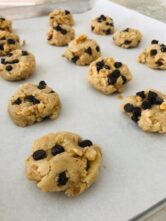
Raw Sunflower Spirulina Cookies

Experimenting in the kitchen one day with spirulina, I discovered some amazing cookies that are also good for you. These raw cookies are gluten-free and grain-free.


INGREDIENTS:

1 c sunflower seeds, soaked 5-10 hrs

3 tbsp macadamia nut butter

3 ½ tbsp date paste

1 tsp powdered vanilla bean

¼ tsp salt


DIRECTIONS:

 1. Place in greased liner in dehydrator and make about 1/6-inch thick.

2. Dehydrate 10 hrs at 105 degrees. Turn over cookies. Dehydrate another 5 hrs or to desired texture.

3. Store in an airtight container in the fridge.

4. Place by heaping tbsp on a greased cookie sheet and flatten slightly so they’re somewhat evenly thick.

5. Bake for 8 mins, turn around in the oven, and bake 1-2 more mins.

6. Let cool only 5 mins then remove.


Tina Turbin

www.GlutenFreeHelp.info

k.m.

Share

If you would like permission to reprint informaton from this page, please contact me.

Add to FacebookAdd to DiggAdd to Del.icio.usAdd to StumbleuponAdd to RedditAdd to BlinklistAdd to TwitterAdd to TechnoratiAdd to Yahoo BuzzAdd to Newsvine


Saturday, January 7th, 2012

Green Beaver Company Review

     We review a lot of gluten-free companies and products, but it isn’t very often that we come across a body product line that is gluten-free.

Green Beaver is a Canada-based company that truly believes in being gluten-free. From kids’ products to women’s lip products, this company is sure to have something for everyone. This company takes pride in making sure their products are certified organic as well. Green Beaver understands that pesticides accumulate in fatty tissue (bioaccumulation) and are endocrine disruptors. As many of us know, repeated contact with even small doses of pesticides can cause build up in the body which possibly can cause immune and nervous system disorders years after exposure. Using certified organic products can be very beneficial for those with celiac or gluten-sensitivity due to our weaker immune systems.

We tested many of Green Beaver’s products. One of our testers fell in love with the Star Anis toothpaste. He said that he had tried other anis(anise)-flavored toothpastes, and they always tasted very artificial to him. Green Beavers Star Anis toothpaste tasted like real licorice!

     Most important, we always want to protect our children. Green Beaver has a wonderful children’s line complete with a bubble bath. It is gentle enough to use on your kids but still gets the job done. The products are all naturally scented so you don’t have to worry about overwhelming scents. We found them to be very light and pleasing.

Some people who are celiac or gluten-sensitive don’t see a reaction from gluten touching the skin, but why take the risk? With your pores opened from the heat of your shower, whatever you use on your hair or body is sure to get into your system. Green Beavers line of body products for adults is no ordinary organic gluten-free line. It also works! I find that most of the body products at my local health food store just don’t get the job done. My hair is left feeling dry and my skin isn’t moisturized well enough.

     One of our testers said that the lavender shampoo and conditioner were just what she has been looking for. The shampoo really cleaned her hair, and the conditioner gave her that deep-conditioned feel that she normally only gets from salon conditioner. She also thought the body lotion was excellent. It is very thick so she wanted me to warn you that “a little bit goes a long way!”

My favorite product of Green Beaver would have to be their lip shimmers. They moisturize your lips so well and leave them with just the right tint of color. Having a gluten-free product to put on your lips is a must. We all lick our lips and eat food throughout the day. We are bound to get any lip product into our mouth.

When it comes down to it, if you are going to be on a gluten-free diet, remember that everything that touches your body can get into your system. Green Beaver has taken the initiative to ensure these healthy choices are readily available to us.

Green Beaver is truly at the top of our list now.

Miranda Jade

www.Glutenfreehelp.info

Share

If you would like permission to reprint informaton from this page, please contact me.

Add to FacebookAdd to DiggAdd to Del.icio.usAdd to StumbleuponAdd to RedditAdd to BlinklistAdd to TwitterAdd to TechnoratiAdd to Yahoo BuzzAdd to Newsvine


Saturday, December 17th, 2011

Macro Life Naturals – Review

I had the wonderful opportunity to test a few of Macro Life Naturals Products, the Macro Greens and the Miracle Reds and 3 incredible bars they now offer.

I am celiac. Let me clarify,  I am a highly (and I mean highly) sensitive to “greens”celiac- such as barley grass and wheat grass, so please do read on and get a new take on this very topic and my new view as of this recent testing.

First of all I have a wonderful team in Los Angeles and Florida that assisted me through this particular testing. I wanted feedback and I wanted it from all people, with all sorts of particular body needs or not.  So, this was quite a unique company to review as we elicited a number of kids and athletes to really put it to the test.

Let’s dive a little into Macro Life first. A caring mom, Sylvia Ortiz wanted to help her son loose some weight and out of this desire resulted in the original Macro Greens.  Her son lost 35 pounds, dropped down to 12 % body fat and then Sylvia lost 60 pounds as well.  Since that time Macro Greens® was named the most successful product ever in retail sales over a five-week period at Whole Foods chain markets. Wow!

The owners profess that Macro Greens is non-allergenic, nutrient-rich and will optimize the body’s pH and  surpasses the nutrition of five servings of fruits and vegetables. They also state that if used daily one will experience increased energy, weight loss, increased mental clarity, balanced blood sugar, strengthened immune system and improved digestion. So that was worth testing out for sure. Read on and let’s see what we discovered on a one on one basis here in LA and FL.

Miracle Reds® (a delicious red powder) is stated as being the a superfruit anti-aging blend providing immense antioxidant protection. They go on to share that it will locate and diminish unstable free radicals that damage healthy cells and cause premature aging. Now I am all for that! It has some of my favorite fruits: Goji, Pomegranate, Acai, and Mangosteen.

They also had us test their 3 bars: Macro Green Chocolate and Cinnamon Bar, Miracle Reds Berri Berri Bar and Macro Green Apple Lemon Ginger Bar. Let me just say now that everyone (yes everyone) who tested these found them to be absolutely scrumptious. Of course there are always those that prefer chocolate over fruit or fruit over chocolate (me) but that was the only side comment was, if they had to choose. But they don’t so they loved them all. They are a quick boost of energy, loaded with the greens or the reds, great fiber (which we celiacs NEED) and some protein to top it off. Kids of all ages loved the bars. The athletes (I am speaking triathletes and marathon runners) felt they were a  perfect after train smack or even a mid day snack. Two of the men said they would start buying them now without a doubt.

Ok, so now let’s look at the Macro Green testing:

Tina, this was the best before training boost of anti oxidants I have ever had.” – One of my athlete testers

I can not say enough positive things about both the powders, Macro Greens and Miracle Reds. My husband drank it before heading off to work and he felt much better all day long. I gave it to my kids after school with their snack and they “DRANK IT” and I actually noticed they fell asleep better each eve. I used it  in my water during my work-out and I did not get the wiped out feeling I always get after heavy cardio”- Mother of two celiac kids

I can say that I loved the taste and did not get the terrible troubles I usually get from Barley. I loved knowing I was getting a load of nutrients without having to pop a load of pills. I actually cut down on my minerals. I can overall say it felt like CLEAN food. I can say that if I drank the Macro Greens every day I started to get tummy distress but as I initially said I am HIGHLY sensitive to barley grass. Some celiacs are. So I cut back. I also made some grain-free, gluten-free cookies with the greens. We call them Macro Cookies. I am not sure if heating them destroys any or All of the benefits so I made them in the dehydrator as another test. We call these Raw Macro Cookies

Now let’s discuss these delicious Miracle Reds. Let me share a very special story. One lady was just out of the hospital and was under a lot of stress and lacked decent nutrition before entering. She had little money and little after care. We delivered the reds in single serving packets to her for her ease in taking them. She was told she would be in bed a good 2 weeks healing. After 8 days on the Miracle reds she called me to tell me she felt life like again, for the first time in ages.

I also had several moms and dads call me with all sorts of stories exclaiming how pleased they were with the flavor, the benefits and ease in taking them etc. It was a winner!

The Miracle Reds and Macro Greens come in single serving packs as well as canisters of 30, 10 and a 2 ounce container to test without a big commitment.

According to the owners Miracle Reds® and Macro Greens® are among the most popular whole food supplements currently sold at most supermarkets and specialty health food locations we all know and shop at. After conducting this test, I can see why!

I really am very pleased to have been able to have tested this company’s products and the extremely positive outcome. I am also more pleased to say that this company is one of the finest we have tested in the past two years as far as supplements. These products are top quality, care and consideration for the public’s health and well being.

Please do yourself a favor and try them out: http://www.macrolifenaturals.com/

Tina Turbin

www.GlutenFreeHelp.info

k.m.

Share

If you would like permission to reprint informaton from this page, please contact me.

Add to FacebookAdd to DiggAdd to Del.icio.usAdd to StumbleuponAdd to RedditAdd to BlinklistAdd to TwitterAdd to TechnoratiAdd to Yahoo BuzzAdd to Newsvine


Thursday, December 8th, 2011

Sweet Potato Spice Ravioli

This stuffing is not only gluten-free, but it’s also casein-free, and no one will ever know it! It has a bit of a kick with just the right touch of spice to not overwhelm the sweet potato, and it’s not overly sweet either. This is a delicious gluten-free and casein-free filling for a unique meal. Add some candles, and you’re set for quite an evening. I use chipotle powder, which has a wonderfully smoky flavor combined with a spicy kick. I just love it, and I hope you do, too.


See my page with the ravioli recipe to make at home!

(Makes 12 full size homemade raviolis)


INGREDIENTS

2 cups fresh baked sweep potato

1-1/2 tsp Chipotle Powder

¾ cup Follow You Heart Vegan Gourmet Cream Cheese “alternative” (OR use real cream cheese if you prefer dairy)

¼ tsp salt or more to taste


DIRECTIONS

1. Mash all this up with the back of your fork until well-blended and fairly smooth, not pureed. Do not be tempted to use a hand mixer.

2. Fill your ravioli shapes and seal edges.

3. Cook ravioli according to your own recipe or this one.


Tina Turbin

www.GlutenFreeHelp.info

Share

If you would like permission to reprint informaton from this page, please contact me.

Add to FacebookAdd to DiggAdd to Del.icio.usAdd to StumbleuponAdd to RedditAdd to BlinklistAdd to TwitterAdd to TechnoratiAdd to Yahoo BuzzAdd to Newsvine


Monday, December 5th, 2011

Why is it So Hard to Replace Wheat?

Dr. Alessio Fasano answers the question, “Why is replacing wheat hard?” in his Scientific American article, “Surprises from Celiac Disease.”

Explains Fasano, gluten is what makes wheat-containing baked goods so airy and light. During the baking process, the strands of gluten “trap” carbon dioxide gas and water from the ingredients, and then they expand.

In making gluten-free goods, GF bakers usually use a combination of several different flours and starches, as well as other ingredients because just one substance can’t do on its own what the gluten in wheat does.

This explains why GF products can be so much more expansive than wheat-based items and why it’s so hard to get that true-to-taste quality in them.

Stay tuned for more interesting tidbits and be sure and visit the all wheat and gluten-free recipes on this site!


Tina Turbin

www.GlutenFreeHelp.info

Blog Widget by LinkWithin
Share

If you would like permission to reprint informaton from this page, please contact me.

Add to FacebookAdd to DiggAdd to Del.icio.usAdd to StumbleuponAdd to RedditAdd to BlinklistAdd to TwitterAdd to TechnoratiAdd to Yahoo BuzzAdd to Newsvine


Follow me on Twitter

Find me on Linked in Find me on Facebook

  • Categories

  • Tina Turbin

    About Me | see more

    Tina Turbin became extremely interested and involved in the subjects of gluten free, gluten sensitive and celiac disease a number of years ago as a result of...

    Follow Me!
    Bookmark and Share


    Grab a Button!

    Gluten Free Help Information

    Simply copy the code above and paste it into your website and help others become aware of Gluten Sensitivity.